ERP project is the power word we have been hearing for so long. But its failure is what none of us were expecting. It has to be a success when you need to make your business successful. The ERP system needs a new strategy to shift failures to successes. And for that, you need a strategy and an excellent Dynamics 365 ERP Consulting Partner.
Why Does An ERP Project Fail
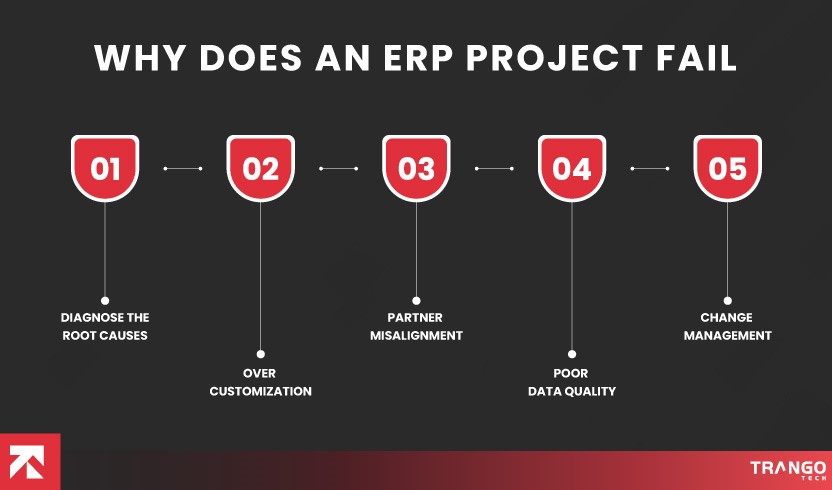
Whenever you witness failure, the only question popping into your mind is what was the reason behind it. So, it’s important to identify the reasons to actually solve the problem.
Diagnose The Root Causes
A failing project can be reused only when the root cause is known.
Over Customization
It is one of the causes for failure, as unnecessary customization slows down the system.
Partner Misalignment
Selecting the wrong partner means choosing someone who lacks the right expertise.
Poor Data Quality
The data is not properly cleaned, and messy data is transferred, leading to failure.
Change Management
Adoption of the system is not taken seriously and is treated as an optional task. At the same time, it is a significant task that requires planning.
Also Read: How We Rescued a Failed Business Central Implementation
Why Choose Dynamics 365
Dynamics 365 is the only solution for businesses because it offers a myriad of advantages and is the most competitive solution in the world.
User-Friendly Interface
Dynamics 365 offers a user-friendly interface that makes it easy to use. They can easily navigate the system.
Cloud-based Access
The cloud infrastructure allows organizations to add more users and features whenever they need. It supports scalability without complexity.
Customizable Dashboards
The dashboards are configured to display the KPIs that leadership needs to make decisions.
Integrated System
The system connects with other tools and applications for seamless data sharing and connectivity. From Shopify to Amazon and other marketplaces, D365 integration connects all systems.
How To Recognize A Failing Project
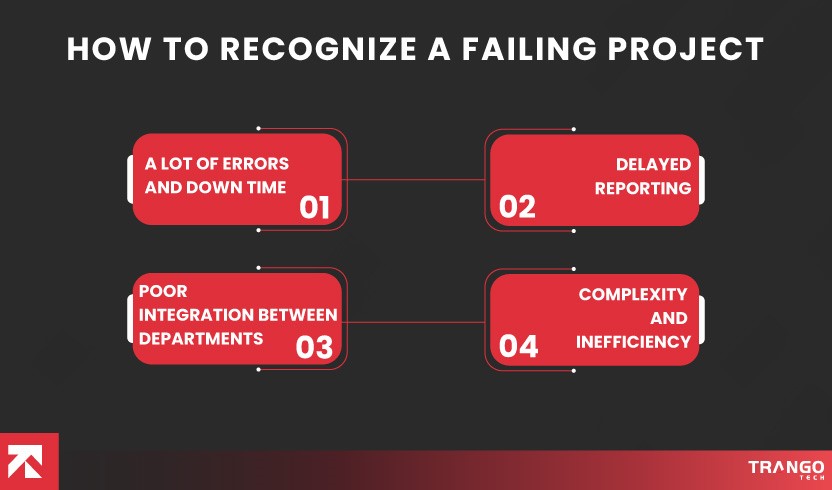
Every failure comes with warnings and indicators that allow you to change your strategy and build something new to make it a success. In the case of an ERP project, you will see:
A Lot Of Errors And Downtime
The system will crash frequently, leaving you frustrated. This is the most common indicator of ERP project failure.
You will not be able to perform basic functions.
The data is inconsistent and inaccurate.
When employees cannot use the system properly, they will complain about it out of frustration. The modules are not configured properly, leading to inefficiencies.
Delayed Reporting
Another reason for the failure is delayed reporting. The reports are generated slowly, which is frustrating for employees.
The system was implemented to offer real-time insights, not a delay. This issue raises questions about the system’s credibility.
When they encounter inconsistent data, they are unable to perform actions easily. Various operations, including warehouse operations, are at stake.
Moreover, they cannot conduct audits or ensure compliance.
The most basic purpose of implementation remains unfulfilled with this issue. It makes decision-making tough and unreliable, relying on guesswork.
Poor Integration Between Departments
A failing system is produced because of poor integration. Integration was meant to connect systems to eradicate data siloes and communication barriers. It led to failure because you did not avail D365 Business Central migration services.
Poor integration affects the operations and leads to inaccuracies in order fulfillment.
Manual rework and customer frustration become an everyday hustle for the business.
This is because the data was not migrated properly. Poor data entered the system because it was not properly designed. This also happens because of a wrong system selection that cannot meet the business’s requirements.
Complexity and Inefficiency
The ERP system was designed to be easy to use, not complex. When systems become complex, users feel frustrated.
If the system is slow, it becomes hard to perform even basic tasks. Users complain more often.
The duplication of data due to reliance on manual methods makes the system incompatible. If the super is still relying on manual methods, the whole point of the implementation fails.
This frustration leads employees to leave the system. When the most basic activities cannot be performed, the employees question the reliability of complex functions.
Businesses have to monitor the system and ask users about issues through feedback, forms, and interviews. The user’s complaints pile up, and the system becomes a red flag.
Why Recognition Matters
A business needs to constantly monitor the system for red flags that could disrupt it. Early recognition will allow them to find a solution to this problem without delay.
This leads to:
- Redesigning workflows
- Fixing configurations
- Managing user adoption
Neglecting these is the reason why “Out-of-the-Box” Business Central often fails
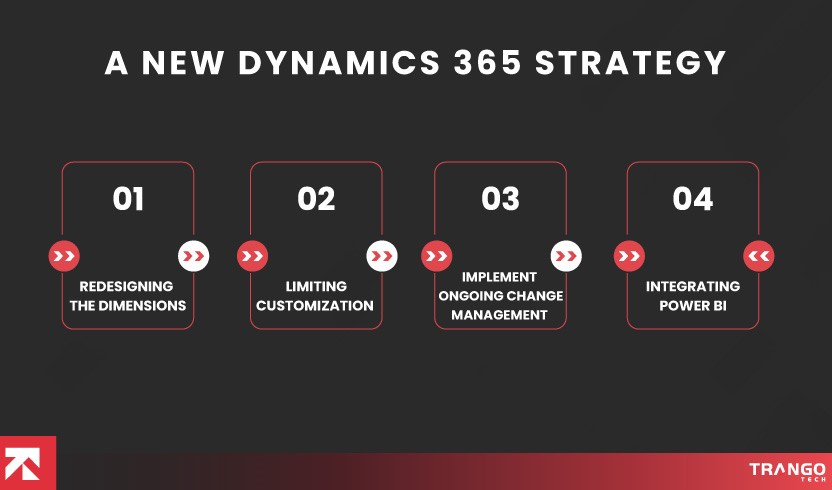
A New Dynamics 365 Strategy
After analyzing the root causes, it’s time to actually implement the new strategy. And this time it’s a strategic one, so that I don’t lose.
It starts with asking the right questions. And the right question is, what goal do you want to achieve after implementing the system?
So it could be improving financial management, streamlining global operations, or reducing order processing time.
I set measurable targets to achieve the goals after meeting with the stakeholders.
For instance, if they want to improve accuracy, there is a percentage set, like 99%.
This led to proper accountability.
Redesigning the Dimensions
Now I sat with all the important teams and asked the right questions to refine the dimension model.
- Are they using any manual methods?
- How do they access data and make decisions?
After a detailed discussion and asking the right questions, I was able to redesign dimensions across products, warehouses, regions, and costs.
Now I have integrated Power BI with Dynamis so that decision-makers can see the data accurately and identify actual profits, stock levels, margins, and other key metrics.
his is how they can use data to make correct, much-needed decisions for success.
Customization Was Limited
As discussed earlier, I realized that customizations are not yielding results but are harming the system. I just checked all the customizations to see if they are useful.
And I found customizations that were not really used, so I eliminated them.
And standard workflows were maintained for smooth operations that don’t break during upgrades.
And the results were instant, making upgrades easier.
Implement Ongoing Change Management
I realized that change management should be part of the strategy from the outset.
So I created training sessions with one-to-one support, weekly sessions, and refresher training.
Support was available around the clock if users got stuck.
Integrating Power BI
We all know Power BI is a powerful tool that offers real-time KPI views.
So, I integrated it to analyze the system health, analyze trends, and forecast cash flows.
This Business Central Implementation, with the right strategy, is a success booster, as it allows stakeholders to see what is important and analyze performance.
Results
So, finally, after implementing the new Dynamics 365 Strategy, I waited for a while, and the results were what I expected. Inventory accuracy was almost 99%, user adoption improved by 95%, and order processing time improved. All the goals were accomplished. There was no manual workflow; everything was automated, with live data access and visibility, making decision-making easier.
Leadership made decisions promptly without wasting a single second. Sales, marketing, and other teams were able to process orders faster than ever.
This made the transformation real and valuable.
Lessons Learned
So the new Dynamics 365 target was fruitful, and I learned that.
- A strategic plan will always work.
- Customization is not always necessary.
- Prompt reporting is significant.
- Involve end users at an early stage
- Prioritize testing and change management
Conclusion
Failure is not stopping you from growing, but it is a chance to restart and learn the right way to success. This is how I turned a failing ERP project around with a New Dynamics strategy. It begins with asking the right question and following the correct path by realigning the strategy.
FAQs
What is the reason for the failure of an ERP project?
ERP projects fail because proper planning is not done before implementation. The lack of a strategic approach and the neglect of change management led to failure.
Can a business rescue a failing ERP project?
Yes, a business can rescue a failing ERP project by realigning the processes and devising a robust strategy after analyzing the pitfalls.
How to start saving the failing project?
To save a failing project, you need to analyze the system, identify gaps, and document them. The complete audit of the system will expose all the inaccuracies, and you can work on them to save the project.
How to measure success after the implementation of the system?
To measure the success, you need to set clear KPIs that may include processing time, data accuracy, etc.
What steps should be taken to save the project?
To save the project, you must make a strategic plan, prioritize testing, offer change management, and avoid excessive customization.